Let's talk about the transition nobody mentions
You've spent years, maybe decades, calibrating your pleasure around someone else's rhythm. You know what they like. You've learned when they're present, when they're distracted, when they're ready. Your body has become fluent in partnership. And now you're exploring solo pleasure for the first time in years, or maybe ever, and it feels weirdly foreign.
That disorientation is completely normal. It doesn't mean something is broken. It means you're learning a new language with your own body.
Why solo exploration matters after partnered sex
When you've been in a long-term partnered dynamic, your pleasure becomes entangled with someone else's timing, presence, and energy. That's not wrong. It's actually beautiful. But it also means your nervous system hasn't had recent practice being fully alone, fully focused on your own sensation, without any observer effect.
The brain genuinely responds differently when you're solo. There's no subconscious calibration around a partner's satisfaction, no checking in mentally about whether they're enjoying themselves, no negotiating pace or intensity in real time. Your prefrontal cortex can finally go quiet.
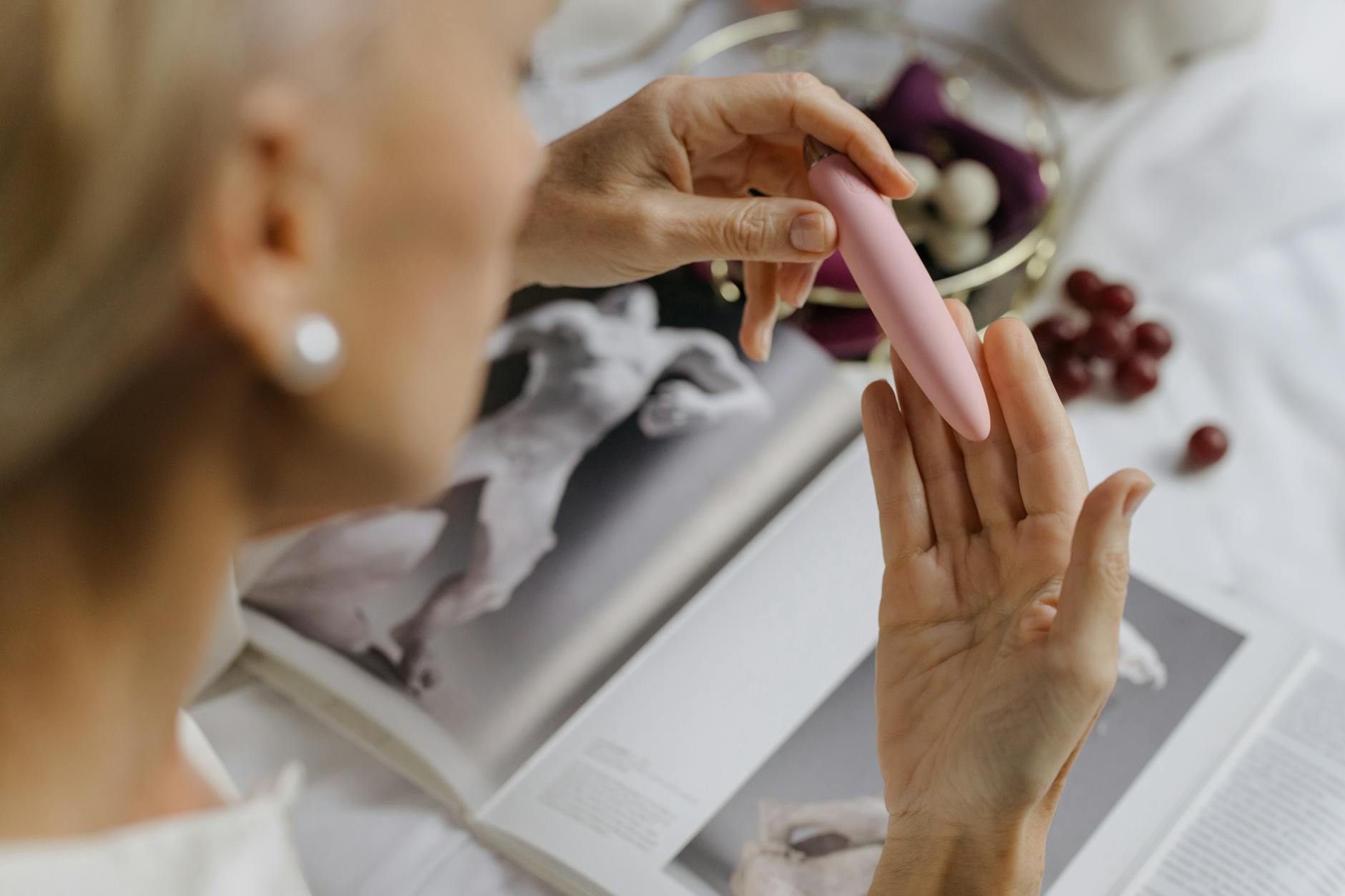
This matters because pleasure isn't just physical. It's neurological. And retraining your brain to feel safe exploring by yourself is a skill that needs practice. A lemon clitoral vibrator becomes the tool that helps you practice that skill without judgment or pressure.
The awkwardness phase is not a red flag
Honestly, the first few times might feel mechanical. You'll be hyperaware of the sensation. You might second-guess yourself. You might feel like you're performing for an invisible audience. You might notice you're checking the time.
All of that is grief mixed with learning. Your body is adjusting to a new context for pleasure. That takes time. I tell my clients to expect the first 5-10 solo sessions to feel experimental and slightly off. That's the threshold, not the failure point.
One thing that helps: give yourself permission to stop. Not because something is wrong, but because this isn't a productivity metric. If after ten minutes you're not feeling it, you can put it down and try again later. That permission actually paradoxically makes it easier to relax into it when you do try.
How to set the physical stage
Environment matters more than you probably think. Here's what tends to help:
Time of day: Many people find evening or early morning works better than midday. Your nervous system is calmer, fewer competing demands, your cortisol is lower. Weekends often feel safer than weekdays.
Space: You don't need candles or music if that feels performative. But you do need a door that locks, a phone on silent, and clarity that you have at least 20-30 minutes without interruption. The brain cannot relax into pleasure while scanning for threats. A locked door is a locked door. Use it.
Temperature: A blanket nearby is underrated. Having something soft to wrap around yourself afterward, when your nervous system is unwinding, makes the whole experience feel more grounded and less weird.
Hands: Wash up first. Not from a cleanliness standpoint (though that's fine), but because cool water on your hands, a small deliberate act, signals to your nervous system that you're caring for yourself. It sounds silly. It's not.
Starting with a lemon clitoral vibrator specifically
A lemon vibrator works because of its design and simplicity. Unlike penetrative toys, you're not negotiating what penetration means when you're alone. You're focusing purely on external clitoral stimulation, which means you can experiment with pressure, pattern, and duration without managing multiple sensations at once.
Start at pattern 1 or 2. I know that sounds obvious, but the instinct when you're alone is often to prove something to yourself by jumping to higher intensities. You don't have to prove anything. Lower intensities actually teach you more about your own response because they demand attention. You can't zone out at pattern 1. You have to feel it.
Speed up the pattern only after you've explored what lower settings feel like for a solid 5-10 minutes. Let your body tell you when it's ready for more. That's the opposite of how partnered sex often feels, where someone else is setting the pace.
The mental piece (which is actually the hard part)
Listen: after years of partnered sex, part of your brain is trained to interrupt pleasure with monitoring. Are they still into it. Did I take too long. Am I being weird. Is this normal. That narrator needs to get quieter.
One technique that helps is naming what you're feeling in real time, internally, like narration. Not to perform it, but to anchor yourself in your own body.